Understand the symptom first

Car Problems & Advice

Describe what your car is doing—not the part you think has failed. These guides explain possible causes, warning signs and the checks used to reach a diagnosis.

Start with the symptomWhat you hear, feel or see.
Check safety firstKnow when to stop driving.
Test before repairPossible cause is not a confirmed fault.

Explore by system

What part of the car seems affected?

Engine

Engine Problems

Understand engine noises, vibration, power loss, warning signs and the checks used to find the cause.

View guides
AC

Car AC Problems

Practical guidance for weak cooling, warm air, unusual AC noises and cooling that changes in traffic.

View guides
Brakes

Brake Problems

Learn what brake vibration, noise, pedal changes and warning lights may mean before parts are replaced.

View guides
Steering

Steering Problems

Find likely inspection areas for steering shake, pulling, looseness and changes in steering effort.

Guides not yet available
Suspension

Suspension Problems

Explore clunks, knocks, uneven tyre wear, bouncing and ride-quality problems.

View guides
Transmission

Transmission Problems

Understand delayed shifts, jerking, slipping, fluid leaks and transmission warning messages.

View guides
Electrical

Electrical Problems

Guidance for intermittent electronics, starting faults, warning messages, wiring and charging issues.

Guides not yet available
Battery

Battery Problems

Learn why batteries go flat, how Dubai heat affects battery life and when the charging system needs testing.

View guides
Cooling System

Cooling System Problems

Understand overheating, coolant loss, fan faults and temperature changes in traffic.

View guides
Noises & Vibrations

Noises & Vibrations

Start with what you hear or feel, then narrow down the systems that should be inspected.

View guides
Maintenance

Car Maintenance Advice

Clear answers about service intervals, fluids, filters and maintenance for UAE driving conditions.

View guides

More diagnosis guides

Maintenance, noises and warning signs.

Every guide explains possible causes, safe checks and the professional tests needed before repair.

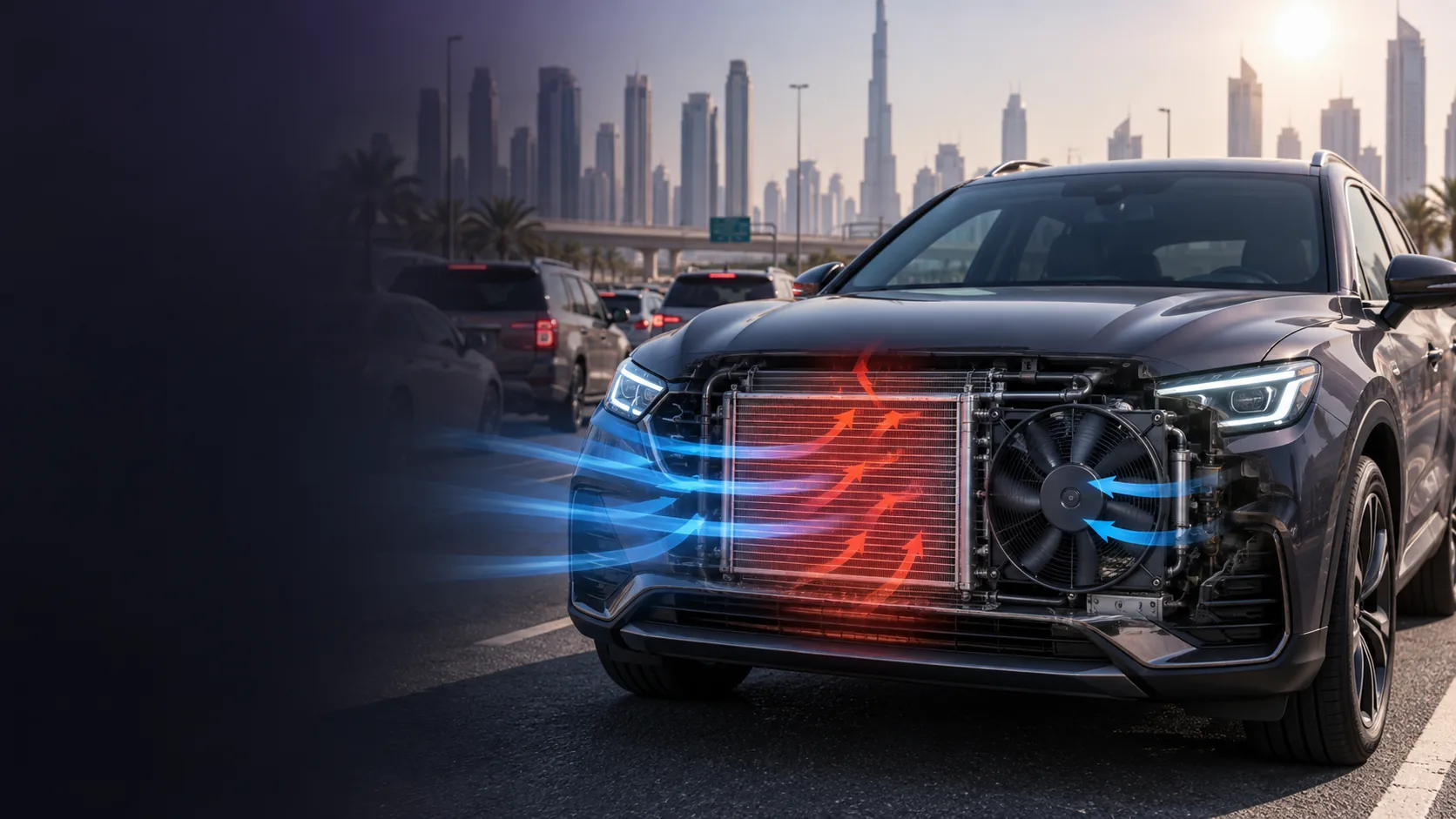
Educational illustration of condenser heat and cooling fan airflow while a car idles in Dubai traffic
Moderate priority

Why Is My Car AC Cold While Driving but Warm When Stopped?

If the vents become cold once the car moves but warm again at a traffic light, the first question is whether the condenser can reject enough heat at idle. Road speed forces air through the condenser; while stopped, the electric fan must provide that airflow. A weak fan is a leading inspection area, but blocked fins, incorrect refrigerant charge, pressure-control faults and compressor problems can produce the same pattern.

See causes & what to do
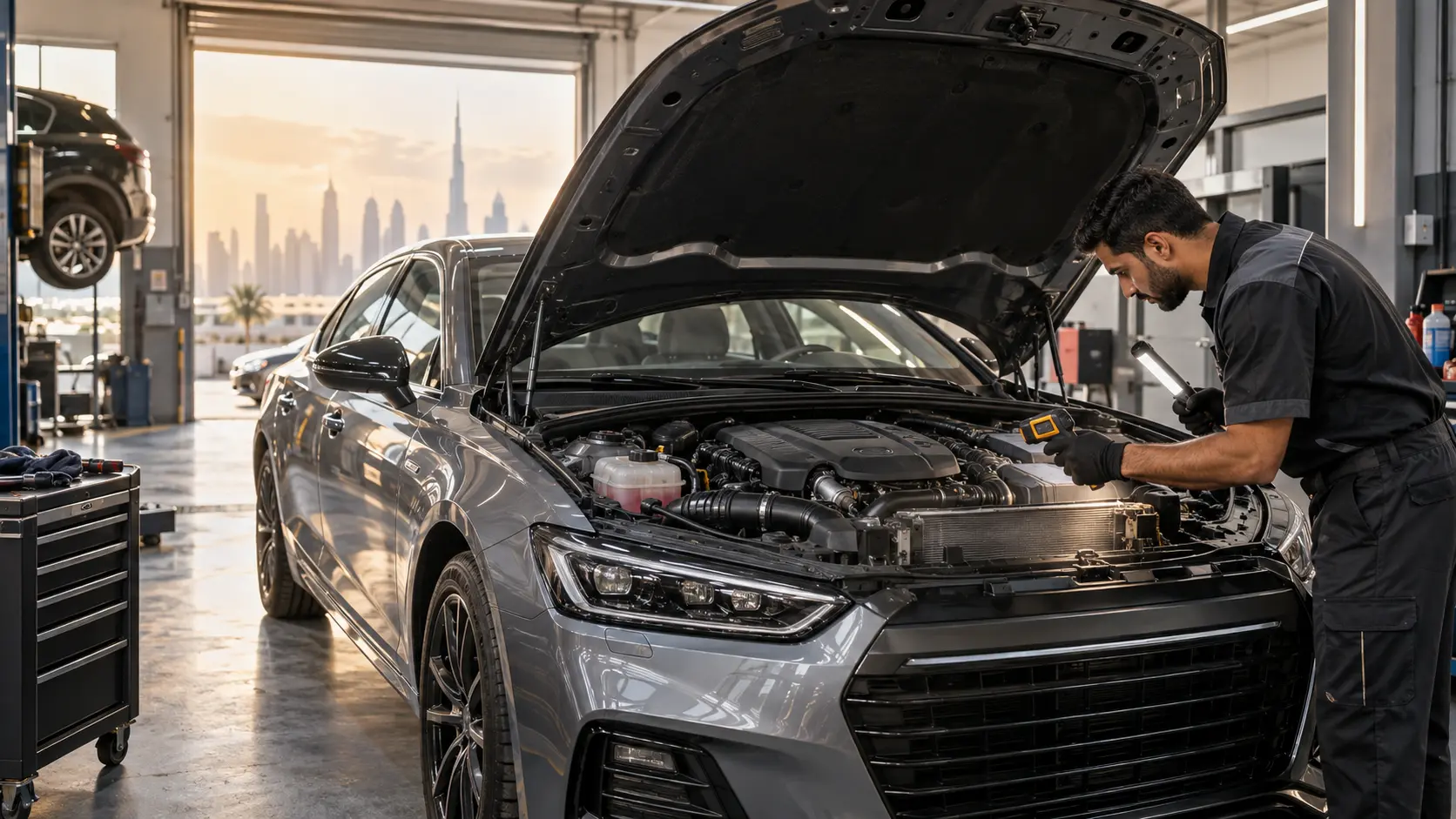
Mechanic checking the cooling system of an overheating car in a Dubai workshop
Urgent priority

Why Is My Car Overheating? Causes and What to Do in Dubai

An overheating engine means the cooling system is no longer removing heat fast enough. Low coolant, a leak, poor airflow, a failed fan, thermostat or water pump, restricted radiator flow, loss of system pressure or an internal engine fault can all cause it. If the gauge keeps rising, a warning appears or steam is visible, stop safely and switch off the engine.

See causes & what to do
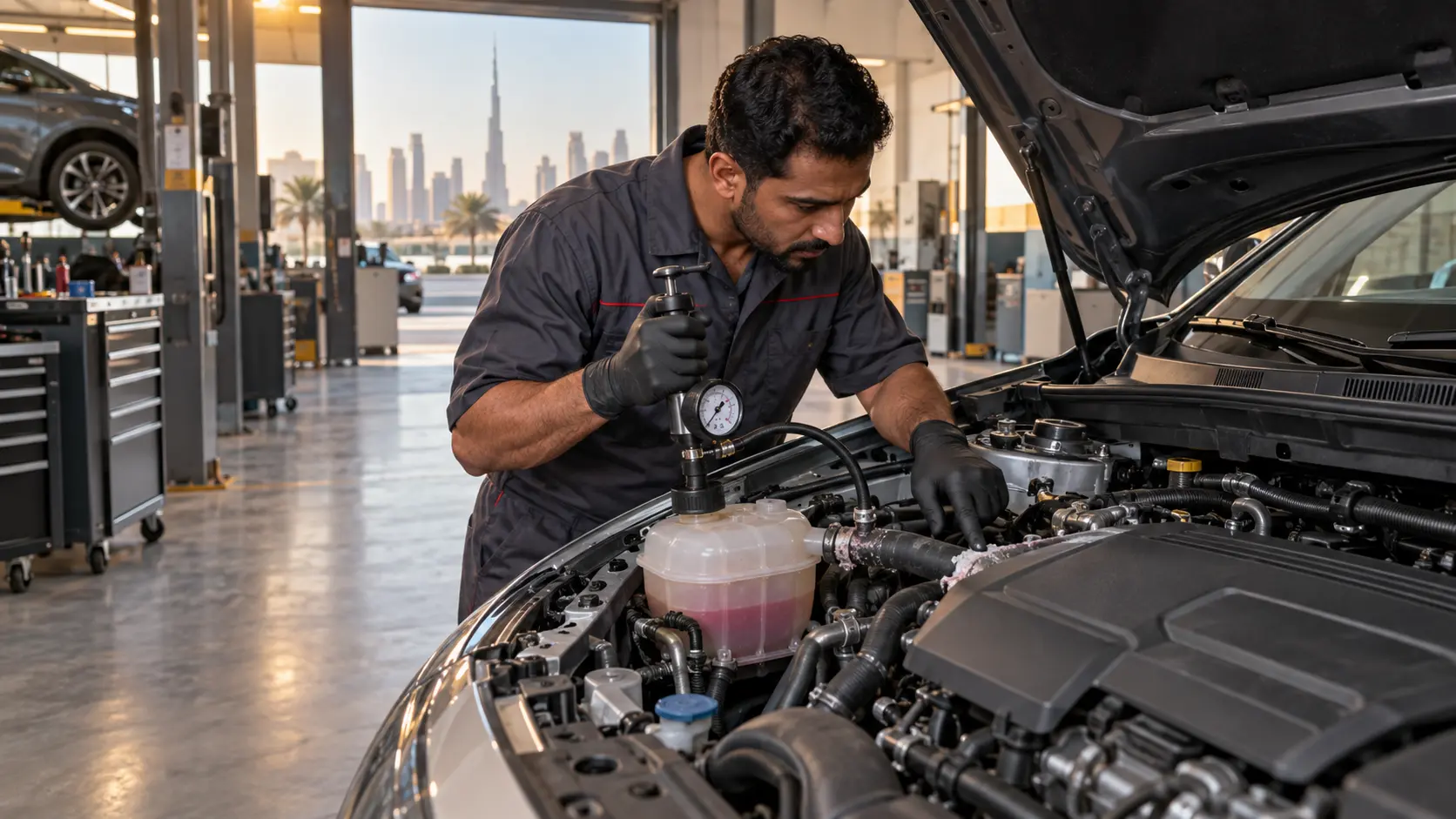
Mechanic pressure-testing a car cooling system to find a hidden coolant leak in Dubai
High priority

Why Is My Car Losing Coolant With No Visible Leak?

If the coolant level repeatedly drops, the system is usually losing coolant externally, releasing it through the pressure cap or losing it internally—even when no puddle is visible. A hot-only leak may evaporate on the engine, collect in an undertray or remain hidden inside the heater or engine, so repeated top-ups should be diagnosed rather than treated as normal consumption.

See causes & what to do

Useful guidance, not a remote diagnosis.

Different faults can create the same symptom. These guides help you understand likely inspection areas, but a confirmed diagnosis requires testing the vehicle.

Request an inspection