
Recognise the pattern
Symptoms that often appear with this problem
- The steering wheel vibrates only or mainly during braking
- The vibration becomes stronger when braking from higher speed
- The brake pedal may also pulse
- The car may pull slightly while braking
Narrow it down
First identify when the vibration happens
The same word—vibration—can describe different faults. Timing, location and pedal feel narrow the inspection before parts are removed.
Vibration mainly while braking
Prioritise disc thickness variation, disc or hub runout, pad deposits and caliper operation.
Vibration at a repeatable road speed
Tyre condition, wheel balance, rim runout and mounting move higher on the inspection list.
Vibration plus pulling or an unsafe pedal
Treat it as a brake-safety concern. Avoid further driving and arrange inspection or recovery.
Most likely inspection areas
What can cause it?
Brake disc thickness variation or runout
Uneven contact between the pad and rotating disc can transfer a repeated force through the hub and steering.
Hub or wheel mounting runout
Rust, debris, incorrect wheel torque or hub runout can prevent the disc and wheel from rotating true.
Worn front suspension or steering parts
Play in control-arm bushes, ball joints or tie rods can amplify a smaller brake vibration.
Other possible causes
- Uneven brake-pad deposits
- Sticking brake caliper
- Wheel or tyre problem that is more noticeable under braking
If the symptom is ignored
What can happen if you keep driving?
- Longer or less predictable braking
- Accelerated pad and disc wear
- Heat damage from a dragging caliper
- Worsening steering or suspension play
- Loss of confidence and control during emergency braking
How serious is it?
High
Braking vibration needs prompt inspection because it can affect control and may indicate a brake or suspension fault.
Checks and diagnosis
What can you check safely?
- Notice whether vibration occurs only during braking
- Check whether the brake pedal also pulses
- Look for a brake warning light
- Confirm that wheel bolts are present; do not attempt roadside brake disassembly
What requires professional inspection?
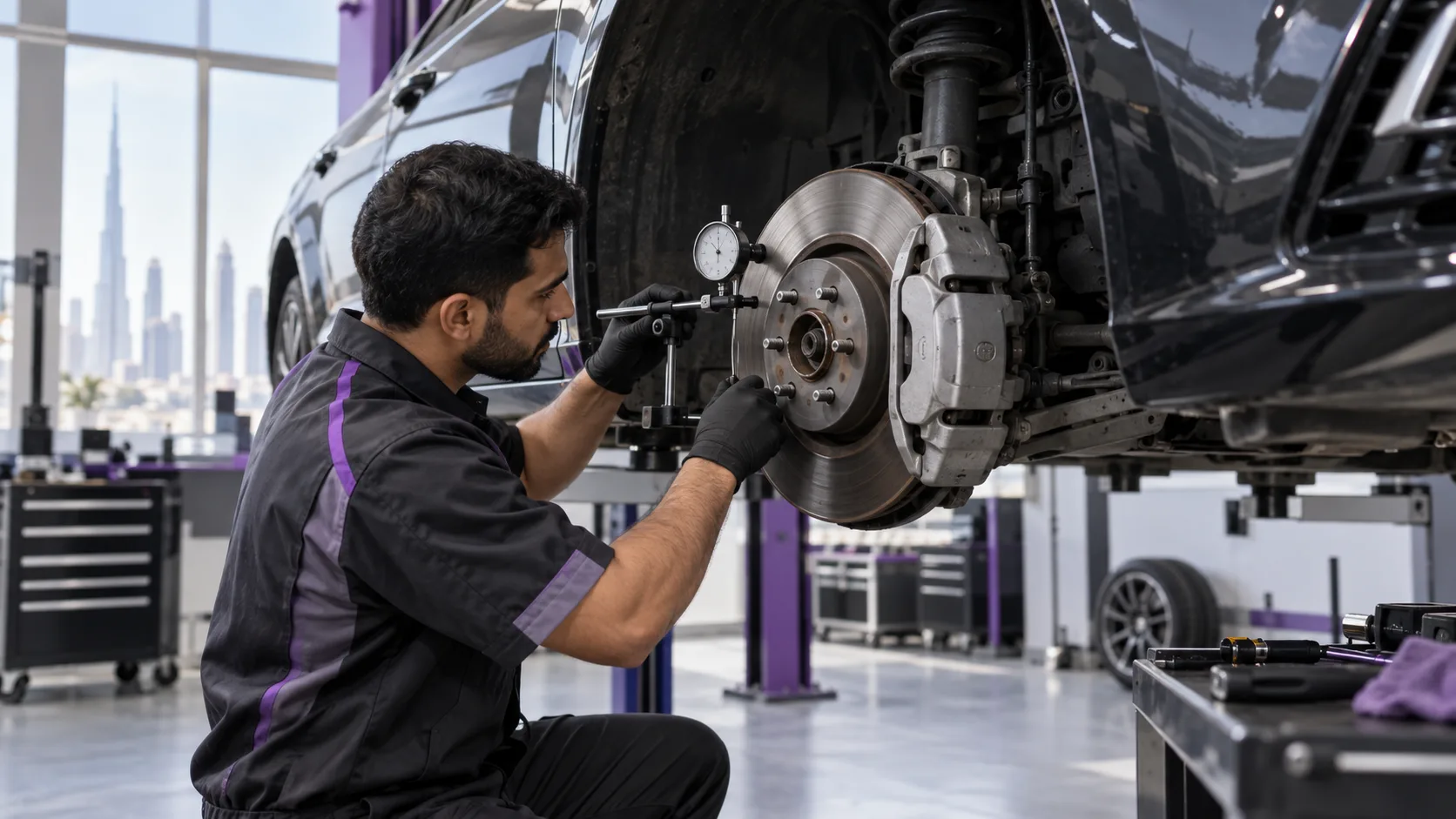
- Brake-disc thickness and lateral runout measurement
- Hub-face cleanliness and hub runout
- Pad wear and caliper operation
- Front suspension, steering and wheel mounting
Workshop process
How the cause should be diagnosed
- 1Road-test the symptom safely
- 2Inspect pads, discs and calipers
- 3Measure disc and hub runout instead of judging by appearance
- 4Check wheel torque and front suspension play
- 5Confirm the repair with a controlled road test
Repair direction
Typical solutions after diagnosis
A symptom alone should not be used to approve parts. Depending on the test results, the repair may include:
- Correct wheel and hub mounting
- Brake service or disc/pad replacement when measurements confirm it
- Caliper repair where movement is restricted
- Replacement of confirmed worn steering or suspension parts
Related components
Dubai driving context
Why local conditions matter
Repeated braking from highway speed and heat can make an existing brake-disc or hub issue more noticeable. The cause still needs measurement; heat alone does not prove the discs require replacement.
Frequently asked questions
Questions drivers ask about this symptom
Does steering shake always mean warped brake discs?
No. Disc variation is common, but hub runout, wheel mounting, calipers and suspension play can feel similar.
Can wheel balancing fix vibration while braking?
Balancing helps vibration linked to road speed. If it appears mainly during braking, the brake and hub system should also be measured.
Should brake discs and pads be replaced together?
That depends on measured disc condition, pad wear and manufacturer limits. Inspection should decide the repair scope.
Further reading
Reference material
These links provide background on the systems discussed. They do not replace the owner’s manual or repair information for your exact vehicle. Procedures and test values vary by model.