Recognise the pattern
Symptoms that often appear with this problem
- Oil level falls between services
- Fresh oil or coolant spots under the car
- Low-oil, oil-pressure or coolant warning appears
- Sweet smell, steam or coolant residue around the engine bay
- Temperature runs higher than normal
- Engine sounds louder, ticks or knocks
- Heater suddenly blows cold while the engine is hot
One-minute habit
A simple check before it becomes a repair
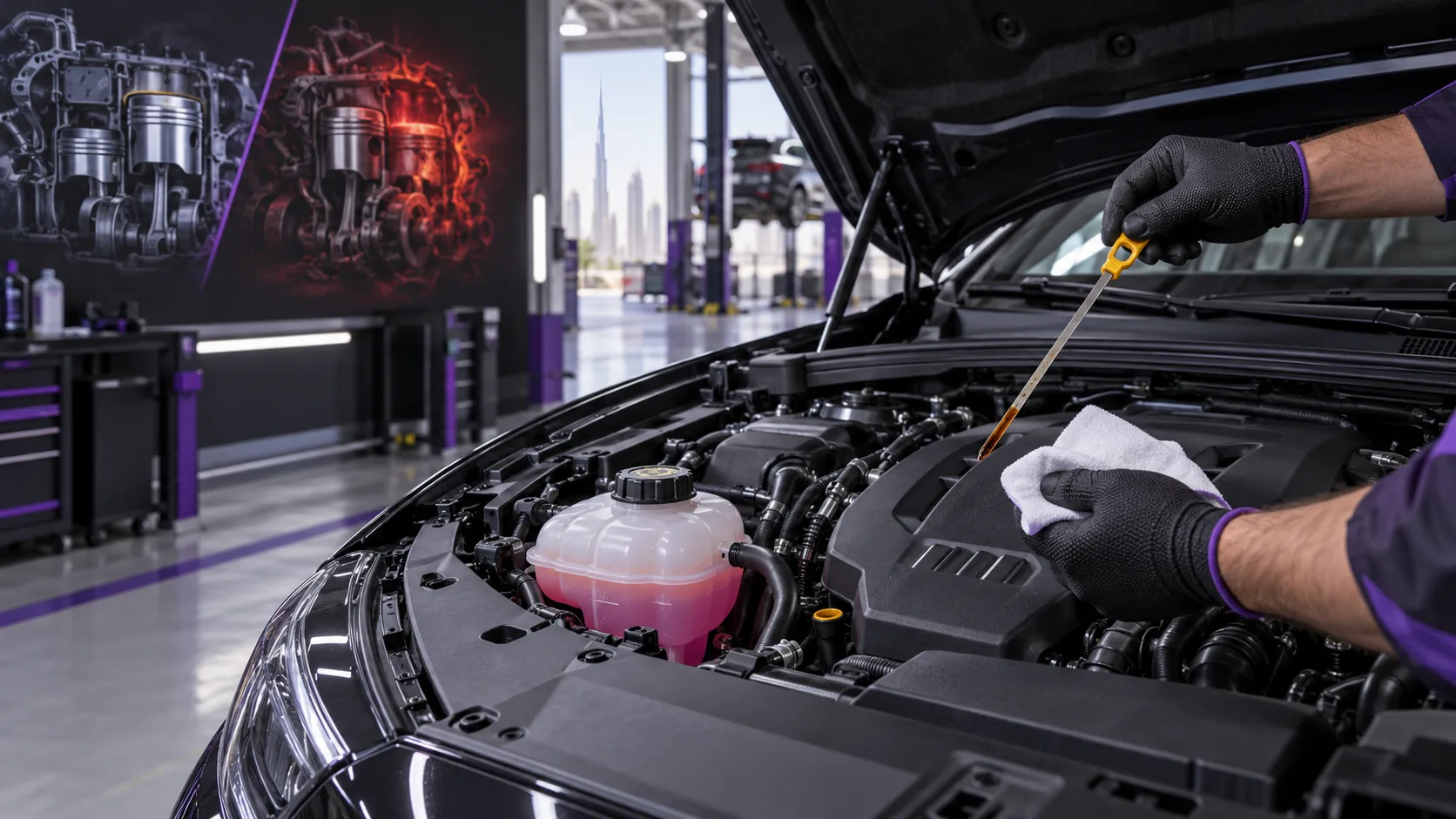
1. Park safely
Use level ground, select Park, apply the parking brake and keep the engine off. Follow the vehicle manual for hot/cold and waiting conditions.
2. Check oil correctly
Use the dipstick twice or the vehicle's electronic measurement process. Keep the level within the specified range; do not overfill.
3. Check coolant cold
Read the reservoir marks only when the engine is cold. Never open a pressurised hot cap.
4. Look for the reason
A drop, stain, smell or residue needs investigation. Topping up does not repair a leak or consumption problem.
Most likely inspection areas
What can cause it?
Oil level not checked between services
Leaks and oil consumption can lower the sump level before the next scheduled service. Low level can uncover the oil pickup during braking or cornering and reduce lubrication.
Oil service overdue or wrong specification
Oil degrades through heat, contamination and time. The wrong viscosity or approval can affect lubrication, timing systems, turbochargers and emissions equipment. Follow the exact manufacturer specification and interval.
Coolant leak or repeated topping-up
A falling reservoir level is evidence to investigate, not a normal fluid expense. Hoses, radiator, water pump, expansion tank, cap, thermostat housing or internal leaks may be involved.
Wrong coolant mixture or incompatible coolant
Coolant is more than coloured water: the correct mixture manages freezing/boiling protection, corrosion and material compatibility. Colour alone does not identify the correct specification.
Other possible causes
- Oil-filter or drain-plug leak
- Valve-cover or oil-cooler leak
- PCV-related oil consumption
- Water-pump seal leak
- Expansion-tank or cap fault
- Radiator or heater-core leak
- Thermostat or cooling-fan fault
- Head-gasket or internal engine damage
If the symptom is ignored
What can happen if you keep driving?
- Oil starvation and bearing damage
- Timing-system or turbocharger damage
- Overheating and cylinder-head distortion
- Head-gasket failure
- Complete engine replacement in severe cases
How serious is it?
High
A slightly low level deserves correction and investigation; a red oil-pressure warning or overheating warning is different. Continuing to run the engine can multiply the damage within minutes. Stop safely and switch the engine off rather than driving to test whether the warning disappears.
Checks and diagnosis
What can you check safely?
- Park on level ground, apply the parking brake and follow the owner-manual procedure
- For a dipstick system, wait the specified time after switching off, wipe, fully reinsert and read again
- For an electronic gauge, follow its temperature and waiting conditions
- Check coolant only with the engine completely cold and read the reservoir MIN/MAX marks
- Look for new wetness, stains or residue without reaching near belts or fans
- Never open a hot radiator or expansion-tank cap
What requires professional inspection?
- Correct oil grade, approval, level and service history
- Oil leaks, consumption, filter housing and oil-pressure test when indicated
- Cooling-system pressure test and cap test
- Coolant concentration, condition and correct specification
- Hoses, radiator, water pump, thermostat housing and fan operation
- Combustion-gas, compression or leak-down testing only when evidence suggests internal damage
Workshop process
How the cause should be diagnosed
- 1Confirm the exact warning, temperature behaviour and recent service history
- 2Measure oil and coolant correctly before adding anything
- 3Inspect for external leaks and underbody traces
- 4Pressure-test the cooling system or oil system where the symptom requires it
- 5Identify why the level dropped instead of masking it with repeated top-ups
- 6Quote the confirmed repair before work begins
- 7Refill with the vehicle-approved specification and verify under operating conditions
Repair direction
Typical solutions after diagnosis
A symptom alone should not be used to approve parts. Depending on the test results, the repair may include:
- Correct-specification oil and filter service
- Repair of a confirmed oil leak or excessive consumption cause
- Cooling-system leak repair and correct coolant refill/bleeding
- Replacement of a failed hose, reservoir, cap, thermostat, radiator or water pump when confirmed
- Cylinder-head or head-gasket repair after measurement
- Turbocharger or engine repair only when testing proves damage
Related components
The cost of waiting
Small maintenance can become major engine work
These examples describe repair scope, not prices. Vehicle, engine, fluid specification, parts and damage level determine the final quotation after inspection.
Oil/filter service and inspection
Routine service scope depends on the specified oil, filters and inspection findings
Leak diagnosis, hose/cap repair or coolant service
Repair scope depends on the confirmed leak location and affected parts
Water pump, radiator, head-gasket or cylinder-head work
Repair scope depends on the cause of overheating and any confirmed engine damage
Turbo, bearing, crankshaft or complete-engine repair
Internal damage may require major component repair or engine replacement
Dubai driving context
Why local conditions matter
High ambient heat, long idling and stop-start traffic increase thermal load. They do not justify inventing a shorter universal interval: use the manufacturer schedule and severe-use guidance for the exact model, then check levels between services—especially before a long trip.
Frequently asked questions
Questions drivers ask about this symptom
How often should I check oil and coolant?
Use the owner manual first. A practical habit is before long trips and regularly between services; check sooner after a repair, if the car consumes fluid or if any warning, smell, stain or temperature change appears.
Can I check engine oil immediately after driving?
Procedures differ. Many manufacturers require level ground and a waiting period after shutdown; electronic systems may have their own temperature conditions. Follow the exact manual so oil drain-back does not distort the reading.
Can I add tap water to the coolant tank?
Use the coolant and water specification in the owner manual. Tap water can add minerals and the wrong mixture can reduce corrosion and boiling protection. Emergency guidance is vehicle-specific.
Is coolant colour enough to choose the right type?
No. Different chemistries can share a colour, and similar colours may be incompatible. Match the manufacturer specification, not colour alone.
Why does coolant keep going low?
A sealed system should not need frequent topping-up. External leaks, a weak cap, water pump, radiator, heater core or an internal engine leak should be checked.
Can I drive with the red oil light on?
No. A red oil-pressure warning can mean the engine is not being lubricated correctly. Stop safely, switch off and arrange inspection or recovery.
Does expensive oil allow me to extend the service interval?
Not automatically. The oil must meet the required specification, and the interval still depends on the manufacturer schedule, engine, use and service system.
Why are repair costs shown as ranges?
Vehicle design, oil capacity, approved fluid, access, parts and the damage already present vary widely. The figures are market context, not a Motor Heads quotation; inspection is required for a written scope.
Further reading
Reference material
These links provide background on the systems discussed. They do not replace the owner’s manual or repair information for your exact vehicle. Procedures and test values vary by model.