
Recognise the pattern
Symptoms that often appear with this problem
- No dashboard power and no starter sound
- Rapid clicking when Start is pressed
- One solid click but the engine does not turn
- Engine turns slowly or unevenly
- Engine cranks at normal speed but does not start
- Engine starts and immediately stalls
- Battery, key, immobiliser or check-engine warning appears
Narrow it down
First: what exactly happens when you press Start?
This guide primarily describes petrol-engine starting. Diesel fuel and preheating checks differ and petrol spark tests do not apply. A hybrid can show READY without its petrol engine running; fully electric vehicles need a different diagnostic path. Follow the exact vehicle manual.
No sound and little or no dashboard power
Start with battery state, terminals, grounds and main power distribution.
Rapid clicking
Low available voltage or high resistance is common; test the battery and connections under load.
One solid click
Check starter command, cables, solenoid, starter current and whether the engine can rotate.
Cranks normally but does not fire
Move away from the starter and test fuel, spark, synchronisation, immobiliser and mechanical timing.
Starts, then stalls
Check immobiliser status, fuel pressure, air/throttle control, sensor signals and power supply.
Most likely inspection areas
What can cause it?
Discharged or failed 12-volt battery
The battery may light the dashboard but still fail under starter load. Voltage, conductance and load behaviour—not age or appearance alone—should decide whether it is discharged, faulty or affected by another problem.
Loose, corroded or high-resistance battery connection
A poor terminal, ground strap or positive cable can produce no crank, rapid clicking or slow cranking even when the battery itself is serviceable.
Starter motor, solenoid or starter-control fault
A single click with strong dashboard power can point toward the starter circuit, but relay command, voltage drop, engine rotation and selector interlocks must be checked before replacing the starter.
Fuel, ignition or engine-management fault
If the engine cranks normally but does not fire, diagnosis moves toward fuel pressure, spark, injector command, crank/cam signals and mechanical timing rather than the starter.
Key, immobiliser or start-authorisation fault
A key warning, unrecognised fob, steering-lock issue, brake/clutch switch or Park/Neutral input can prevent cranking or allow a brief start followed by stalling.
Charging-system or alternator fault
The alternator normally does not crank the engine. After starting, it powers the electrical system and recharges the battery. A failed charging system can flatten a good battery and cause the next no-start.
Other possible causes
- Blown fuse or failed starter/fuel-pump relay
- Empty fuel tank or inaccurate fuel gauge
- Failed crankshaft or camshaft position sensor
- Faulty fuel pump or low fuel pressure
- Wet or worn spark plugs and failed ignition coils
- Flooded engine on applicable petrol vehicles
- Mechanical timing or compression loss
- Engine seizure or accessory locked solid
If the symptom is ignored
What are the risks of repeated starting attempts or leaving the fault unresolved?
- Complete battery discharge
- Starter overheating from repeated attempts
- Being stranded again after an unexplained jump-start
- Electrical shutdown while driving if the charging system fails
- Catalyst or engine damage where repeated starting attempts accompany a fuel or mechanical fault
How serious is it?
High
A no-start may be minor, but repeated cranking can overheat the starter, flatten the battery and hide useful diagnostic evidence. Fuel smell, smoke, burning, damaged cables, severe mechanical noise or a locked engine makes it urgent.
Checks and diagnosis
What can you check safely?
- Select Park, apply the parking brake and press the brake pedal; try Neutral once only if the owner manual permits
- Observe dashboard brightness and warning symbols before and during the start attempt
- Listen for silence, rapid clicks, one solid click, slow cranking or normal-speed cranking
- Try the spare key if an immobiliser/key warning is shown
- Check that the battery terminals are visibly secure without touching damaged, hot, swollen or leaking batteries
- Record a short video of the dashboard and sound for the workshop
- Use jump-starting only when the vehicle manual permits and the battery is not damaged, leaking or frozen
What requires professional inspection?
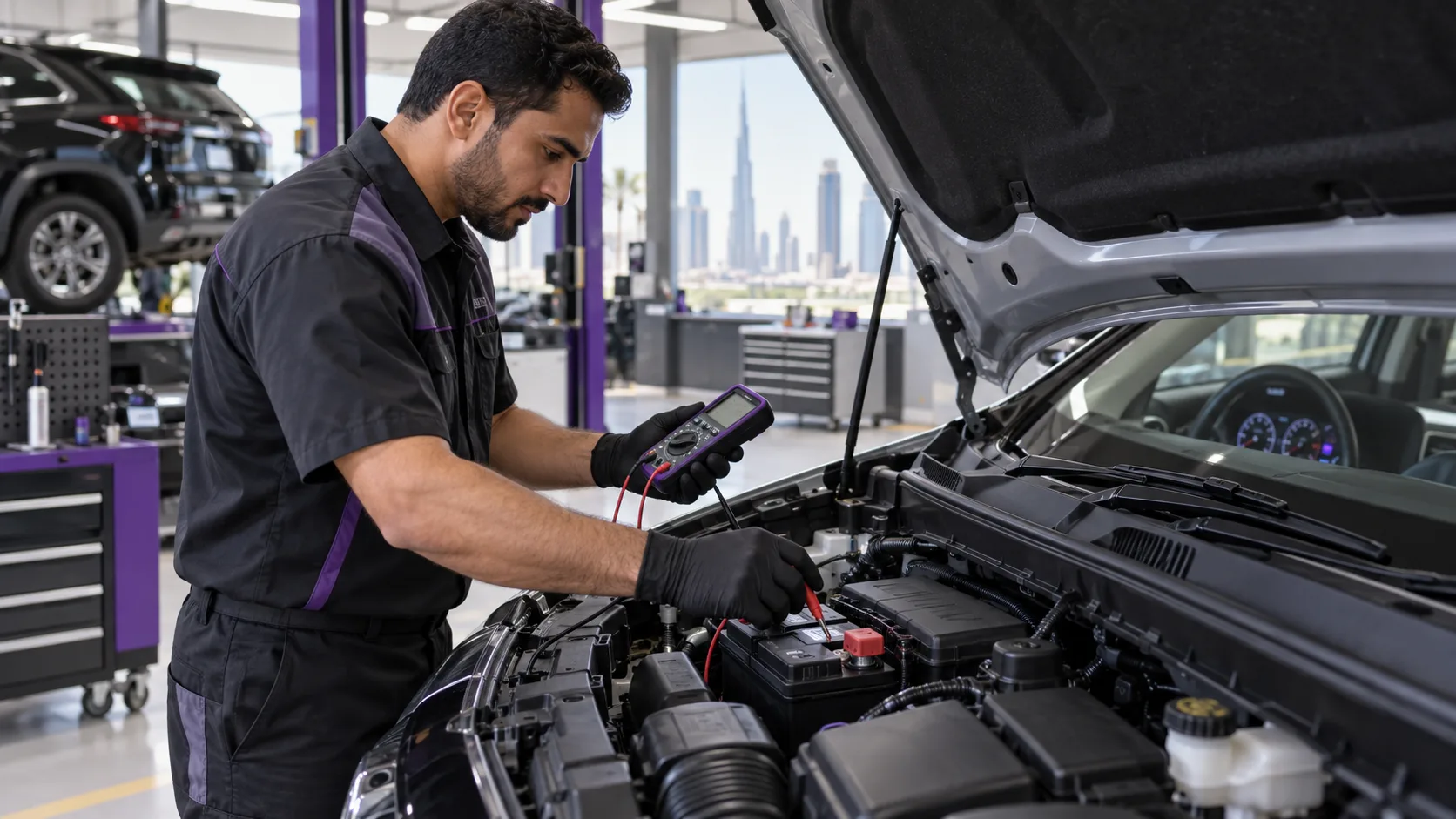
- 12-volt battery state of charge, health and performance under load
- Battery terminals, ground straps and positive-cable voltage drop
- Starter command, relay, solenoid, current draw and engine mechanical rotation
- Alternator output, charging voltage/current and parasitic drain where relevant
- Park/Neutral, brake/clutch switch and start-authorisation signals
- Immobiliser/key status and diagnostic fault codes
- Fuel pressure, injector command, spark and crank/cam synchronisation when the engine cranks
- Compression and mechanical timing only when earlier evidence points there
Workshop process
How the cause should be diagnosed
- 1Classify the symptom before connecting parts or jump leads
- 2Verify battery state and cable voltage drop under load
- 3Confirm starter command and mechanical engine rotation for a no-crank condition
- 4If it cranks, scan all relevant modules without first clearing codes
- 5Check immobiliser authorisation, engine-speed signal, fuel pressure, injector command and spark
- 6Test charging output after the engine starts and investigate why the battery discharged
- 7Confirm repeated hot and cold starting before handover
Repair direction
Typical solutions after diagnosis
A symptom alone should not be used to approve parts. Depending on the test results, the repair may include:
- Recharge or replace a battery only after battery and charging tests
- Clean, secure or replace a confirmed high-resistance terminal, cable or ground
- Repair the starter circuit, relay, solenoid or starter motor after electrical confirmation
- Repair fuel delivery, ignition, sensor or immobiliser faults based on measured evidence
- Repair alternator/charging or parasitic-drain faults that caused the battery to discharge
- Repair mechanical timing or internal engine faults only after compression and timing checks
Related components
Dubai driving context
Why local conditions matter
High under-bonnet temperature accelerates battery ageing and can expose marginal electrical connections. Long parking periods and repeated short trips may also leave the battery undercharged. Heat does not prove the battery is the only fault—test the complete starting and charging system.
Frequently asked questions
Questions drivers ask about this symptom
What is the difference between no crank and cranks but won't start?
No crank means the starter is not turning the engine. Cranks but won't start means the engine is rotating, so diagnosis shifts toward fuel, spark, sensor signals, immobiliser authorisation, timing or compression.
Does clicking always mean the battery is dead?
No. Rapid clicking commonly follows low voltage or a poor connection; one solid click can also involve the starter, cables or a mechanically locked engine. Test before replacing parts.
Is the alternator responsible for starting the car?
The battery provides the initial power and the starter turns the engine. Once the engine runs, the alternator supplies electrical power and recharges the battery. A failed alternator can leave the battery flat for the next start.
If a jump-start works, do I only need a new battery?
Not necessarily. The battery may be discharged because of an alternator fault, parasitic drain, loose connection or long parking. Battery and charging tests are still required.
Can I keep trying until the engine starts?
Avoid long repeated attempts. They can overheat the starter, flatten the battery and flood some petrol engines. Follow the attempt limits and waiting periods in your owner manual. If the fault persists or there is fuel smell, smoke or abnormal noise, stop and arrange assistance.
Why does the car start and then immediately stop?
Immobiliser authorisation, fuel pressure, air/throttle control, crank/cam signals or power-supply faults can cause this pattern. The exact warning lights and scan data matter.
Can a weak key-fob battery stop the engine starting?
On some vehicles it can prevent normal key detection, although many have an emergency key-recognition position. Follow the owner manual and try the spare key if available.
Further reading
Reference material
These links provide background on the systems discussed. They do not replace the owner’s manual or repair information for your exact vehicle. Procedures and test values vary by model.
- Ford: model-specific starting permissions and attempt limits
- Hyundai: no-start checks and safety
- HELLA: Alfa Romeo 147 crankshaft-sensor case, not a universal diagnosis
- HELLA: fuel supply and control-related misdiagnosis
- HELLA: starter and connection diagnosis
- HELLA: fuel pressure checks against manufacturer specifications
- HELLA: ignition coil supply and control testing